Champagne sabrage
Opening a bottle with a stroke of a sabre: a spectacular gesture inherited from the cavalry of the Empire. And one you can learn on board.
Where does this tradition come from?
Sabrage is associated with the Napoleonic era. Tradition has it that the Empire's hussars, cavalrymen famed for their panache, celebrated their victories by opening bottles of champagne with a stroke of the sabre, sometimes without even getting off their horses.
Another legend, very much a Champagne one, features Madame Clicquot, the famous "widow" of Reims: she is said to have offered champagne to officers passing through, who would sabre the corks off to impress her. True or embellished, these stories have made sabrage a symbol of festivity and celebration.
Napoleon is credited with the words: "Champagne! In victory one deserves it, in defeat one needs it."
Not to be confused: in French, sabrer champagne means opening the bottle with a sabre, while sabler champagne means drinking it to celebrate an occasion. So you can sabrer a bottle… then sabler it!
How does it work?
The sabre does not "cut" the glass. A champagne bottle is under high pressure, around 5 to 6 bar, two to three times that of a car tyre. The blade striking the annulus, the glass lip at the top of the neck, at its weakest point where the mould seam meets the lip, is enough to cleanly break off the top of the neck. The cork flies off with the ring of glass, and the bottle stays open, without splinters.
The steps
- Choose the right bottleA champagne made by the traditional method: its pressure and the thickness of its glass are suited to sabrage.
- Chill itThe bottle must be well chilled along its whole length, neck included: cold glass breaks more cleanly.
- Remove the foil and the wire cageTake off the foil and the small metal cage, which would cushion the blow. The cork is now held only by the pressure: keep the bottle pointed towards a clear space.
- Find the seamTurn the bottle to find the fine mould line running along the glass: this is the path the blade will follow.
- Tilt the bottleHold it firmly by the base, tilted at about 30 to 45°, with the neck pointing away from people.
- The strokeThe back of the blade slides along the seam and strikes the lip in a firm, confident movement. It is not strength that counts, but the fluidity of the gesture.
- ServeA little foam escapes and flushes out any fragments: let a little wine flow out before serving, and check the first glass.
Learn sabrage on board
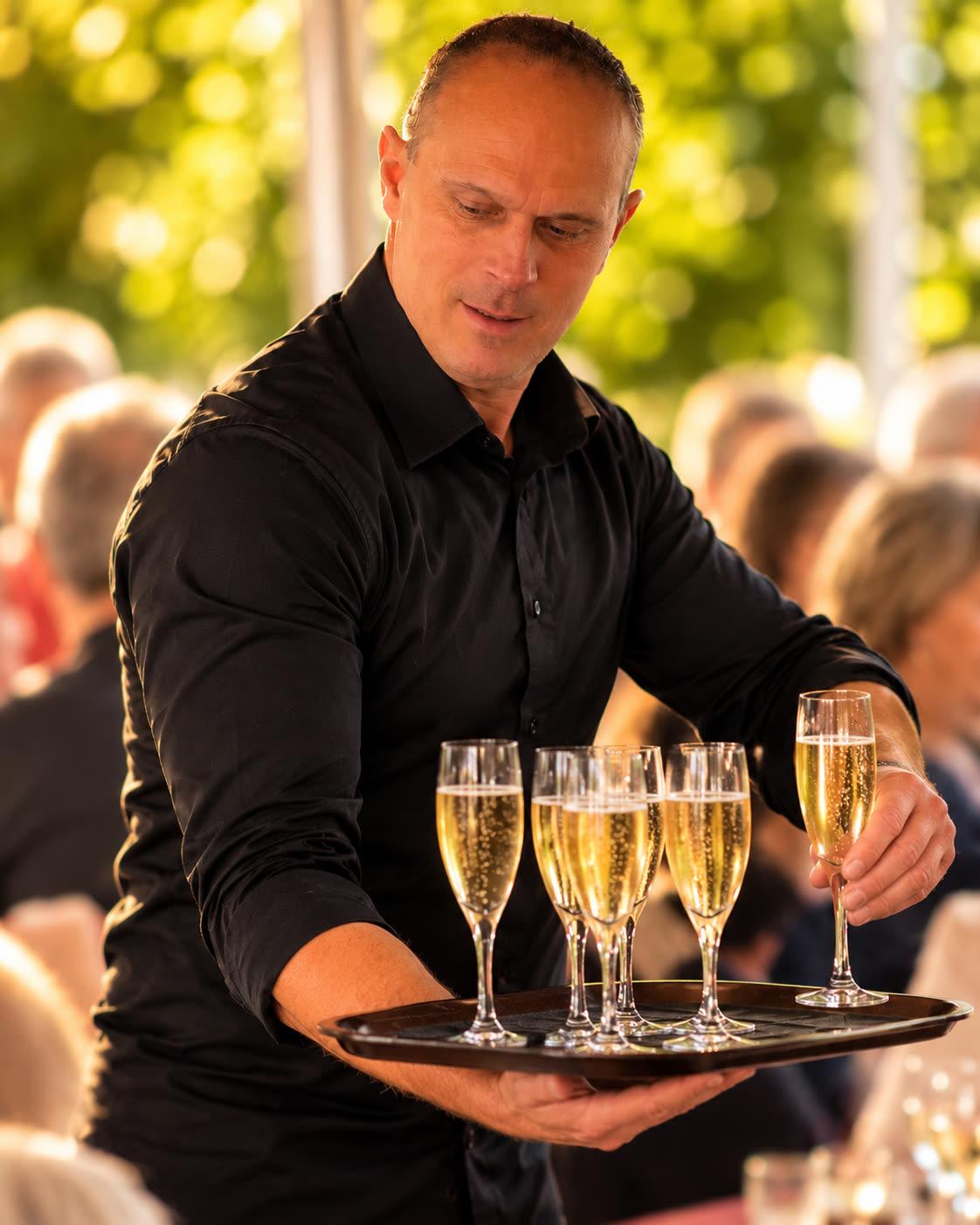
Aboard the Champagne Vallée, Franck, our head waiter, introduces you to this art. He shows you the technique, guides you step by step, then it is your turn to sabre your bottle, sailing along the Marne and facing the Champagne hillsides.
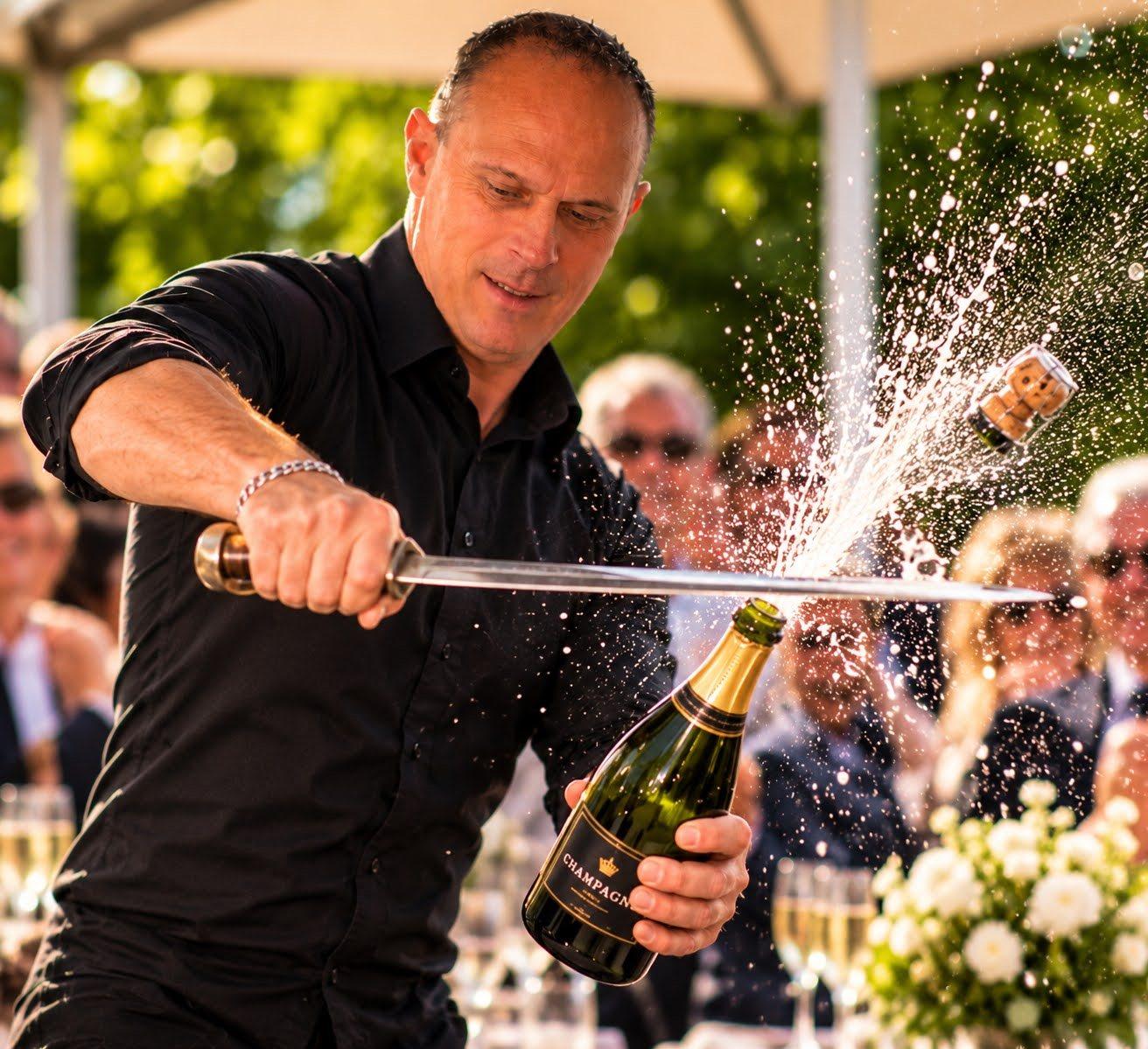
Ideal for a birthday, a stag or hen party, a group of friends or a seminar. The sabrage initiation is available on booking, in addition to your cruise: contact us to arrange it.
Sources: Wikipedia, "Sabrage"; Gault&Millau; Slate.fr. Excessive drinking is harmful to your health; please drink responsibly.
Read also
Sabre on the water
Board in Cumières for a cruise on the Marne and treat yourself to a sabrage initiation with Franck.